
- Arrest Records
- Judgments
- Bankruptcies
- DUIs & DWIs
- Felonies
- Warrants
- Jail Records
- Lien Records
- Sex Offenses
- Misdemeanors
- Criminal Records
- Federal Dockets
What are Washington Court Records?
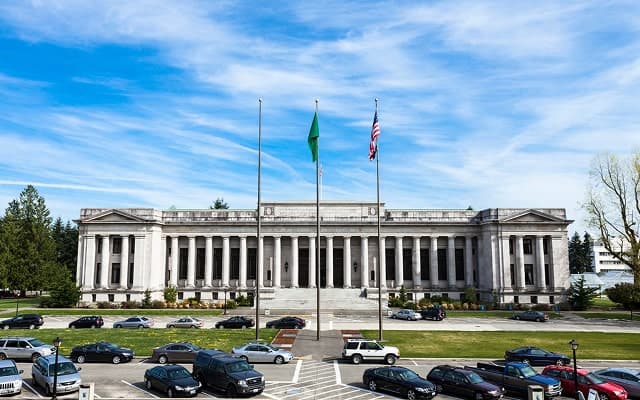
Washington is the 13th largest state in the United States, at 7.9 million people. The state has a typical judicial system with a state supreme court, a state court of appeals, and trial courts, including superior, district, and municipal courts. The judicial system handles over 800,000 cases annually.
Washington court records are regarded as public records in the state and are available to the general public upon request. These records, which include indictments in criminal prosecutions and complaints in civil proceedings, are produced and kept up to date by the courts. Among these records are:
Docket Sheets
These include important details on the parties, judges, and attorneys of record. They also provide a list of the documents used during the trial, complete with their summaries.
Judgments and Orders
These documents provide the verdicts rendered by the court or jury. They are signed by the court following the trial. They contain the final ruling and specify the penalties and obligations for each side.
Transcripts
These are written accounts of court proceedings that record the judges' decisions. They are helpful supporting documents for a motion or when submitting an appeal request.
Evidence
This includes physical and written evidence obtained from police investigations and offered by both parties to the dispute during a trial.
Court Minutes
Court minutes note the beginning and end of a trial. It lists the names of the attorneys and witnesses. The minutes provide an overview of the court's procedures, including recesses, testimony, and official remarks.
Pleadings
These are formal written statements that outline the allegations made by each party to the case. They include motions, plea bargains, and complaints.
Briefs
Attorneys present written arguments to the court in the form of briefs. They are meant to help the court settle the legal issues in the case.
Anyone who knows the details of a case, including the parties' names or case numbers, can access the majority of Washington court records. There might be limitations, however, such as documents related to minors or records containing private data.
Types of Court Cases
The two primary categories of court cases are criminal and civil. Despite their many similarities, the degree of proof required and the potential penalties are the key distinctions between these case types. Traffic and family cases are other categories.
Civil Cases
Civil trials are used to resolve disputes between people and organizations. Civil cases do not lead to jail or other severe loss of rights. Instead, they are resolved by paying fines, addressing the underlying cause of the conflict, or halting specific actions. Their purpose is to settle disputes and possibly bring the plaintiff some peace.
A case often starts when a person or organization (the plaintiff) alleges that they have been hurt by another person or group (the defendant). By submitting a complaint and initiating a legal action, the plaintiff requests redress from the court. To make up for their losses or injuries, the plaintiff may pursue damages or monetary compensation. Additionally, they may request an injunction, which prevents the defendant from doing something.
A judge or a jury decides civil cases. Both parties may also choose to settle out of court, which typically entails a financial agreement. There is no legal right to counsel in a civil action. Civil parties must either employ their counsel or represent themselves in court.
The standard of proof that civil attorneys must fulfill is called the "preponderance of the evidence." This suggests that the evidence presented must have a greater chance of being true than the opposing evidence. Decisions are based on the persuasiveness of the evidence presented, not the quantity of evidence provided. A civil ruling also does not require unanimity.
Criminal Cases
A criminal case is created when a prosecutor, acting on behalf of the government, accuses an individual of committing a crime. Criminal cases deter future criminal activity by rehabilitating or removing offenders from society. Criminal trials typically begin when the culprit is arrested and accused, usually at an indictment hearing.
In criminal prosecutions, defendants have the right to be tried by a jury of their peers. The judge interviews each juror to eliminate any potential bias, and each jury is hand-picked from a randomly chosen pool of district residents. Defendants can also choose a bench trial, that is, one without a jury, as an alternative. Defendants in criminal cases are entitled to legal representation, unlike in civil ones.
Criminal jurors are required to vote unanimously. This is because there are far heavier penalties that could be imposed in a criminal prosecution if proven guilty of a crime. In a criminal case, the penalty could be a fine, jail time, community service, or a combination of all three.
What Are the Different Courts in Washington?
Washington's court system has two appellate courts, superior courts of general jurisdiction in each of the state's 39 counties, and district and municipal courts of limited jurisdiction. State funding for the judicial branch is an estimated ~$300 million a year. State funding for the judicial branch is an estimated ~$300 million a year.
| Court Level | Court Name | Jurisdiction | Key Functions |
|---|---|---|---|
| Appellate | Washington Supreme Court | Statewide appellate | Chooses which cases to review, focusing on constitutional questions, conflicting rulings and matters of public importance. |
| Appellate | Washington Court of Appeals | Statewide intermediate appellate | Must accept, consider and issue a written ruling on each appeal filed. |
| General Jurisdiction | Superior Courts | Unlimited civil and criminal matters; juvenile court | Hears felonies, major civil cases, family law and juvenile cases, and appeals from limited jurisdiction courts. |
| Limited Jurisdiction | District Courts | Misdemeanors, traffic and non-traffic infractions, civil claims up to $100,000 | Handles preliminary felony hearings, protection orders, small claims and some name changes. |
| Limited Jurisdiction | Municipal Courts | City ordinance violations, misdemeanors and infractions within city limits | Handles ordinance and traffic cases; issues protection and no-contact orders; no civil or small claims cases. |
How Many Federal Courts Are In Washington?
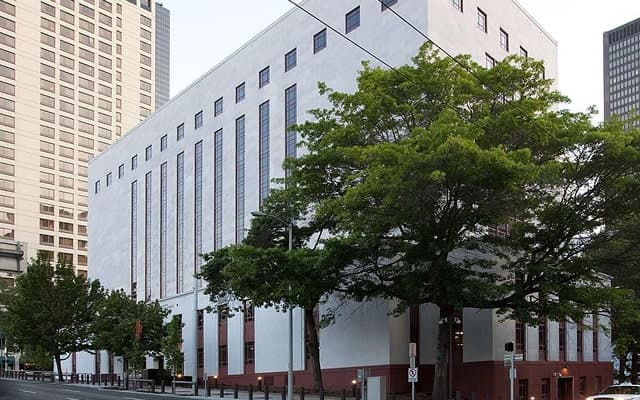
There are two federal district courts in Washington - the Western District of Washington and the Eastern District of Washington. The U.S. District Court for the Western District of Washington serves the region west of the Cascade Mountains, from Oregon to the Canadian border. Tacoma and Seattle are home to the district's courthouses.
On the other hand, the U.S. District Court for the Eastern District of Washington covers twenty counties in the entire region of Eastern Washington east of the Cascade Mountains' peak.
Judges on the federal district courts are nominated by the president of the United States and confirmed by the US Senate. Just like district courts, the Eastern District of Washington Bankruptcy Court and the Western District of Washington Bankruptcy Court are the two federal bankruptcy courts in Washington.
How Many Court Cases Are Filed Each Year in Washington?
Washington trial courts receive an estimated ~1.8 million new filings a year, driven by traffic and parking infractions in district and municipal courts, with clearance rates close to 100%.
| Case Type | Annual Filings | % of Total | Common Offense/Subtype | Clearance Rate |
|---|---|---|---|---|
| Traffic | ~1,100,000 | ~60.1% | Traffic and parking infractions, DUI, speeding | ~100% |
| Criminal | ~330,000 | ~18.0% | Misdemeanors and felonies, DUI, assault, theft | ~100% |
| Civil | ~140,000 | ~7.7% | Contract, tort, collections and property disputes | ~98% |
| Small Claims | ~20,000 | ~1.1% | Money claims up to $10,000 in district court | ~100% |
| Domestic Relations | ~50,000 | ~2.7% | Dissolution, parenting plans, child support, paternity | ~100% |
| Juvenile | ~20,000 | ~1.1% | Offender, truancy and dependency matters | ~100% |
| Other | ~170,000 | ~9.3% | Protection orders, probate, non-traffic infractions, mental health | ~100% |
| Total | ~1,830,000 | ~100% | — | ~100% |
How Do I Look Up Court Cases in Washington?
You can get court records by contacting the court administration for district and municipal courts, the county clerk for superior courts, and the clerk for appellate (Supreme Court and Court of Appeals) courts. Each court has a different process for getting a copy of a court record or access to a court record in a case file.
Although there is no cost to viewing court records inside the courthouse, many courts impose fees for record copies as allowed by law. Additionally, the court may impose a fee for remote access to a court document if electronic access is available.
Online access to court records is made possible by public terminals in certain courts. Many Washington State courts allow you to see JIS public record case information, including a list of papers filed in each case and an index of filed cases through these public terminals. To find out if the court where the record was filed has internet access, contact them. The Washington Court website keeps an online court directory with each court's address and contact information.
Number of Active Judges — State & Federal
Washington's state judges are chosen in nonpartisan elections, while federal district judges are nominated by the president and confirmed by the U.S. Senate. Trial court counts are approximate because many district and municipal judges serve part-time.
| Court | Jurisdiction | Active Judges | Selection Method |
|---|---|---|---|
| Washington Supreme Court | Statewide appellate | 9 | Nonpartisan election, 6-year term |
| Washington Court of Appeals | Statewide intermediate appellate (three divisions) | 22 | Nonpartisan election, 6-year term |
| Superior Courts | General jurisdiction trial courts (39 counties) | ~200 | Nonpartisan election, 4-year term |
| District Courts | Limited jurisdiction (misdemeanors, infractions, civil claims up to $100,000) | ~100 | Nonpartisan election, 4-year term |
| Municipal Courts | Limited jurisdiction (city ordinances, misdemeanors, infractions) | ~90 | Elected or appointed by the city, 4-year term |
| U.S. District Court, Western District of Washington | Federal trial court | ~7 | Nominated by the President, confirmed by the Senate, life tenure |
| U.S. District Court, Eastern District of Washington | Federal trial court | ~4 | Nominated by the President, confirmed by the Senate, life tenure |
| Total Active Judges | — | ~432 | — |
What Court Records Are Not Available to the Public in Washington?
While many court records are available to the public, some records are exempt from public access. Some categories of court records that the public cannot access include:
- Adoption records
- Mental illness commitment records
- Alcohol and drug treatment commitment records
- Paternity records (except final orders)
- Confidential name change records
- Juvenile non-offender records (Juvenile Dependency, Truancy, At-Risk Youth, Child In Need of Services, Termination of Parental Rights, and Developmental Disability Placement)
- Court records sealed by judicial order
Also, documents and case records that are sealed are not accessible or replicable by the general public. Nevertheless, unless otherwise limited by law, records proving the existence of the sealed documents or cases are open to the public.
Average Case Processing Time & Clearance Rates
Processing time in Washington depends on the case type and court level, ranging from a few weeks for infractions to over a year for contested civil and felony cases. The values below are estimates based on typical dispositions.
| Case Type | Court Level | Average Processing Time | Description | Clearance Rate |
|---|---|---|---|---|
| Traffic & Parking | Limited Jurisdiction | ~30–60 days | Most infractions are resolved by payment of a fine, a deferral or a short hearing before a judge or magistrate. | ~100% |
| Small Claims | Limited Jurisdiction | ~45–90 days | Informal hearings on small money disputes, usually decided at a single hearing or by default or settlement. | ~100% |
| Misdemeanor Criminal | Limited Jurisdiction | ~90–180 days | Most cases end in a guilty plea or dismissal after arraignment and a pretrial conference; few go to trial. | ~100% |
| Civil Cases | General Jurisdiction | ~9–18 months | Cases move through pleadings and discovery; most settle or are dismissed before trial. | ~98% |
| Domestic Relations | General Jurisdiction | ~6–12 months | Divorce and custody cases are mostly settled by agreement or mediation; contested cases need a final hearing. | ~100% |
| Felony Criminal | General Jurisdiction | ~6–10 months | Cases begin in a preliminary stage and mostly end in plea agreements; a small share go to jury trial. | ~100% |